
- Commercial Greenhouse
- Film Greenhouse
- PC Greenhouse
- Glass Greenhouse
- Tunnel Greenhouse
- Scientific Research Greenhouse
- Vegetable Greenhouse
- Flower Greenhouse
- Multi-span Greenhouse
- Sawtooth Greenhouse
- Greenhouse Equipments
- Greenhouse Accessories
- Hot Dip Galvanized Pipe
- Irrigation System
- Hydroponics System
- Planting Tools
- Planting technology
Tel: +86 191 5068 3942
Fax:
Mobile: +86 191 5068 3942
Contact: Alina
E-mail: sales@cngreenhouses.com
SKYPE:


Heavy Duty Greenhouse Cover: 6 Mil vs 8 Mil in Wind and Snow
Heavy duty greenhouse cover on a 64x40 m film house: what 6 mil and 8 mil do under wind and snow, and what a heavier sheet cannot carry.
.
TEL:+86 191 5068 3942
- Features


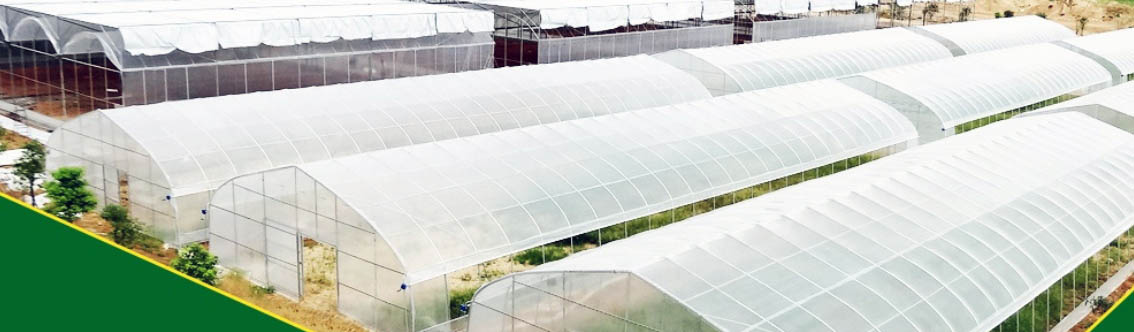
Thickness is the one number on a covering that a buyer can change without changing anything else on the house, and it is also the number most often chosen by habit rather than by load. This page is about the two grades a heavy duty greenhouse cover is commonly bought in, 6 mil and 8 mil, and about what each of them does under the two loads a covered house actually meets. Wind presses and pulls on the sheet. Snow sits on the frame and touches the sheet hardly at all. Separating those two ideas is most of what a thickness decision comes down to. The house written about here is a film house of 64 m by 40 m, 2,560 square metres, listed with a single or double layer of standard clear greenhouse film at 6 mil and a covering material thickness of 0.15 mm or 0.12 mm, on a hot dip galvanized steel pipe frame with an arch roof and a design wind load of 0.35 kN/m2. Nothing here is about how a film ages, nothing here is about how it is fixed, and nothing here is about how much of it to order.

What 6 Mil and 8 Mil Mean in Millimetres
Mil is not a metric unit and it is not a brand of anything. One mil is one thousandth of an inch, which is 0.0254 mm, and the grades a greenhouse cover is sold in are simply that conversion applied to the sheet a buyer is being quoted. So 6 mil is 0.1524 mm, which is why the covering on this model reads as 6 mil and as about 0.15 mm at the same time, and 8 mil is 0.2032 mm, or about 0.20 mm. The model also lists a covering material thickness of 0.12 mm as an alternative, which sits below 6 mil on the same scale.
Converting the three into one table is worth doing before anything else, because a buyer who is comparing a quotation in mil against a quotation in millimetres is not comparing like with like until the units are the same. The last column adds the mass of a square metre, which is what the grade costs in handling and freight rather than in money. Taking the density of polyethylene as 0.92 to 0.95, the mass of a square metre follows from the thickness.
| Grade | Millimetres | Micrometres | Mass of one square metre |
| Lightest listed | 0.12 mm | 120 | About 110 to 114 g/m2 |
| 6 mil | About 0.15 mm | About 150 | About 138 to 143 g/m2 |
| 8 mil | About 0.20 mm | About 200 | About 184 to 190 g/m2 |
The step from 6 mil to 8 mil is a third more material in the same square metre, and the step from the 0.12 mm option to 8 mil is roughly two thirds more. That ratio is the whole of what a heavier grade is: more polyethylene between the weather and the crop, spread over exactly the same area, carrying exactly the same load per unit of area as the sheet it replaces. It is a real difference and it is a narrower one than the words heavy duty suggest.
The Bands the Covering Film Standard Works In
Agricultural covering film is not specified grade by grade. The European standard for thermoplastic covering films for agriculture and horticulture works in bands of nominal thickness instead, and it sets out what a film has to reach to sit in each band. The bands start at 20 micrometres and run past 250, with a break every time the material gets appreciably thicker, and the requirements attached to them rise with the band because a thicker sheet is expected to do more. For a film made of polyethylene or an ethylene copolymer, the bands that matter to a greenhouse are these.
| Nominal thickness band | Impact resistance, flat area | Impact resistance, fold area | Tensile strain required at break |
| 20 to 60 micrometres | 100 g or more | 75 g or more | 250 percent or more |
| 60 to 100 micrometres | 150 g or more | 100 g or more | 300 percent or more |
| 100 to 150 micrometres | 300 g or more | 150 g or more | 350 percent or more |
| 150 to 200 micrometres | 350 g or more | 200 g or more | 400 percent or more |
| 200 micrometres and above | 450 g or more | 250 g or more | 450 percent or more |
Read against the grades on this page, the ladder puts each one in its place. The 0.12 mm option is 120 micrometres and sits in the 100 to 150 band, where a film has to reach 300 g of impact resistance on a flat specimen and 350 percent strain. The 6 mil covering this model lists is about 150 micrometres, the bottom of the 150 to 200 band, where the figures rise to 350 g and 400 percent. An 8 mil sheet at about 200 micrometres is in the top band listed, at 450 g and 450 percent. Taken across the two steps, the impact figure the standard expects rises by half again from 0.12 mm to 8 mil, and the strain figure by roughly a third.
One more requirement in the same table is worth naming, because it is the trade-off nobody mentions when thickness is being sold as a strict improvement. The lowest visible light transmission a film may have also moves with the band, from 90 percent at the thinnest end down to 85 percent for the bands at 150 micrometres and above. Thicker covering, in the standard's own terms, is allowed to pass a little less light. The difference is small and it is real, and on a winter crop at high latitude it is one of the things a heavier grade is buying with.
The figures in that table are minimum requirements for a film to be placed in a band, not measurements of the sheet on this page. That distinction is worth holding on to, because it is the difference between a standard and a specification: the standard says what a 150 micrometre film must reach, and only the supplier's own data says what a particular roll reaches.
What a Heavier Sheet Buys, and What It Cannot
A heavier grade is better at a short list of things, and the list is shorter than the marketing language around heavy duty sheeting usually allows. It resists a puncture or a nick travelling further, because there is more material for a tear to work through. It resists abrasion where the sheet frets against a fixing or a frame member, because the same rubbing takes longer to thin a thicker wall. It hangs with more weight and less flutter in a gust, which reduces the movement that wears a covering at its edges. It has more material left after a season of ultraviolet exposure, so it reaches the same condition later. And it is more tolerant of a mistake during installation: a heavier sheet pulled a little too hard or creased against a hard edge is a sheet that survives the error.
What it does not do is change the load the house is designed for. That is the part of the promise that does not hold. A covering does not carry the house; the frame carries the house, and the covering transfers what it receives to the frame through its fixings. Doubling the thickness of the sheet changes how long the sheet lasts and how much abuse it takes on the way, and it does not raise the wind pressure or the snow load the structure can accept by a single newton. Where a site's wind or snow is the problem, the answer is in the span, the section of the pipe, the bracing and the restraint, and the film grade is chosen afterwards on durability grounds rather than on structural ones.
There is one more thing thickness cannot do, and it matters most on the houses that look most vulnerable. It cannot compensate for a covering that is not tensioned to its profile or for a fixing that is not seated along its whole length. A heavier sheet that is loose moves as much as a light one, and every movement works at the same points; the extra material simply means the failure arrives later, which is a benefit and not a cure. How the cover is run, seated and tensioned on this model is set out on our cover fixing and tension page, and the construction that changes how a sheet behaves once a tear has started is described on our reinforced sheet construction page.
Wind and Snow Are Two Different Loads
The reason a thickness decision gets argued about is that wind and snow arrive at a covered house in ways that feel similar and behave nothing alike. Wind is a pressure on a surface, and it arrives from the side as well as from above. It pushes on the windward face, it pulls on the leeward face, and on an arch roof the changeover between the two happens near the crown. The design wind load listed for this model is 0.35 kN/m2, which is a pressure per square metre of exposed surface rather than a wind speed in metres per second, and it is the figure the structure and the covering together are designed against.
Snow is a weight, and it comes from one direction only. It builds up on the roof, it is carried down through the arch to the frame and the posts, and it reaches the ground through the structure. That difference decides who has to answer for it. Wind is answered partly by the covering, because a covering that flutters or fails lets the pressure in and because a sheet is the first thing a gust meets; snow is answered almost entirely by the frame, because a sheet of polyethylene laid over an arch cannot carry a hundredweight of wet snow and is not asked to. A covering's job in the snow case is only to not be punctured by it, and to not sag into a pocket that holds what would otherwise slide off.
| Load | How it arrives | What has to be chosen for it |
| Wind | Pressure and suction on the exposed surface, from the side and over the roof | The frame and restraint first, then a covering and a fixing that stay tensioned |
| Snow | Accumulated weight from above, carried by the arch to the frame and the ground | Span, pipe section and bracing, with the covering chosen for puncture and sag |
The model lists a wind load and no snow load, and that is not an oversight so much as a reflection of which of the two belongs to the house and which belongs to the place it is built. Wind load is a design property of the structure and it travels with the drawing. Snow load is a property of the site, and the figure for it comes from the ground snow load where the house stands, taken from the national loading code or from the project brief. That is the number a supplier needs in order to answer the snow half of the question, and it is the number buyers most often leave out of an enquiry.
Where the Grade Helps With Wind, and Where It Does Not
Wind is the load case where a thicker covering earns part of its price, and it does so through movement rather than through strength. A sheet held on a frame and loaded from both faces behaves like a membrane: it takes the pressure by changing shape slightly, and if it is not tensioned to the profile it lifts and settles with every gust and every shift in direction. That movement is what wears a covering out at its edges, and a heavier sheet flutters less and abrades more slowly, so the covering and the fixing line both last longer under the same wind.
What the grade cannot do is change the design pressure. The 0.35 kN/m2 this model is designed to is accepted by the frame and the ground anchors and by the restraint that stops the covering lifting, and those are structural decisions. A site whose wind is stronger than the design figure needs a different structure, not a different film, and that conversation belongs with the frame. How span, load and the galvanized coating are settled for a film house is dealt with on our structure that carries the load page, and the honest way to use a thickness choice in a windy place is to take the grade that tolerates the movement, and to put the effort into tension, spacing and anchors.
One practical consequence is worth spelling out, because it is the opposite of what most buyers expect. On an exposed site the failure that actually ends a covering is rarely a sheet torn out of a frame in one storm; it is the covering at a fixing point after two or three seasons of small movements. That is a durability outcome, and it is the outcome a heavier grade improves. A buyer choosing between 6 mil and 8 mil for a coastal or hill site is choosing how long the covering will last in moving air, and that is a legitimate reason to take the heavier sheet even though the design pressure is unchanged.

Snow: Why the Answer Is in the Frame
Snow is the load case that a thickness upgrade does least for, and the reason is that a covering has no way to carry it. A sheet stretched over an arch is in tension; snow applies a downward force to the same surface. The sheet deflects into the space between two arches, the snow follows it down, and what has happened is that a pocket has formed rather than a load being carried. From that point the snow that has settled is no longer sliding anywhere, and the weight of it is being passed to the frame through the film rather than by the film.
Several things follow from that, and they are the ones to act on in a snowy region. The first is that the figure to design to is the site's ground snow load, which for structural design comes from the national loading code, in Europe the part of the loading standard that deals with snow actions, or from the brief written for the project. It is not a figure that can be read off the film, and a supplier who is not given it cannot size a house for snow at all. The second is that span and pipe section do the work: a shorter span carries more snow, and the same house built on a narrower span is a different structure. The third is that shape matters, because an arch sheds snow that a flat roof would hold, until snow reaches the eaves or a slack panel, and both of those make a pocket.
That leaves the covering a small and specific role in a snowy place. It has to resist being punctured by ice or by the sharp edge of a partly frozen drift, which is an impact question and the one place a heavier grade measurably helps, since the standard's impact requirement rises from 300 g in the 0.12 mm band to 450 g in the band an 8 mil sheet sits in. It has to stay tensioned so that it does not become the pocket itself. And it has to be kept clear, because snow that is left to sit and then melt and refreeze is snow that has stopped sliding. What it does not have to be is thick enough to carry the drift, because no film is.
Choosing Between the Grades on a House This Size
The choice is easier when it is broken into the questions that actually decide it, rather than argued from the words heavy duty. On a house of 64 m by 40 m with the covering this model lists, four questions do most of the work, and a fifth decides the practical side of the order.
| Question | What the answer points to |
| Does the site carry snow for a season | Span, pipe section and bracing, with the covering kept tensioned and clear |
| Is the air moving most of the year | The heavier grade, for life under movement rather than for design pressure |
| Is the covering handled, opened and walked past daily | The heavier grade, for abrasion and impact rather than for load |
| Is light the limiting factor for the crop | The lighter grade, or the lighter grade in a second layer for heat |
| Is the house remote, with no second house to move into | The heavier grade, plus covering held back as a spare for one bay |
Two of those rows are about the load and three are about everything else, which is the honest split. Wind puts a covering under moving load and a heavier sheet lasts longer under it. Snow does not, and a heavier sheet in a snowy site is buying puncture resistance and peace of mind rather than structural capacity. Handling, light and spares are ordinary operating questions that a grower is better placed to answer than a supplier, and the answers to them often point the same way as the load ones do.
On a double layer house the question gets a third dimension that is easy to miss. The two layers do not have to be the same grade, and the usual arrangement puts the heavier sheet outside where the weather and the abrasion are and the lighter sheet inside where the light passes through twice. It is a specification the buyer sets rather than a package the house arrives in, so it is worth deciding before the order rather than after the rolls are on site.
The Cover and Frame This Model Is Listed With
The cover the model lists is standard clear greenhouse film at 6 mil, about 0.15 mm, with 0.12 mm available as the covering material thickness, in a single or double layer. The 8 mil grade described on this page is the heavier step above it, about 0.20 mm, and it is what the phrase heavy duty is doing in a product name: naming a grade that can be specified rather than a sheet that every house is built with. The rest of the specification is the frame that grade is going onto, and it includes a hot dip galvanized steel pipe structure with an arch roof, a span of 6.4 m, 8 m, 9.6 m or 10 m, a total structure height of 4.3 m to 6.5 m, a design wind load of 0.35 kN/m2, an area of 2,560 square metres over 64 m by 40 m, materials listed as plastic and mesh, and the covering held with aluminum clips and operated manually or electrically.
| Corrosivity of the air at the site | First maintenance for the coating on this frame |
| Class C2, clean suburban air | 50 years or more, without repair |
| Class C3, urban conditions | About 30 years |
| Class C4, heavy industrial air | About 13 years |
| Class C5, coastal air | About 50 years |
Those four figures are the classes of ISO 9223 applied to a standard galvanized coating, and they are the reason two sites with identical houses can have different maintenance expectations. The frame for this model is specified at 70 to 85 micrometres of zinc under BS EN ISO 1461, assessed to BS EN ISO 14713-1, and cut and drilled points are treated so the coating is continuous. Naming the class is what turns the four figures into one number for one place, and on a coastal site that number is the reason the frame question is worth asking at the same time as the covering grade rather than after it.


Heavy Duty Sites, Small Houses and What Grows Under It
The sheet this model is sold with describes the covering for home gardens and small farms, and that is a fair description of where the grade decision is most sharply felt. A small house with one bay of covering and no second structure to move into is a house where replacing a panel costs a season rather than a morning, and a heavier sheet is worth its mass there in a way it is not inside a large multi-bay operation with rolls in a store. The same logic applies to a windy site of any size: the smaller the house, the more its covering area is exposed relative to the shelter it gets from its own bulk, and a small house on an open plot has more of its surface in moving air than a large one beside it.
Where the crops are concerned, the covering grade is not usually the limiting factor, and it is worth saying so plainly. The crops this model is used for are vegetables, fruit, flowers and seed nursery work, and a fruiting vegetable crop that stands in the house for months puts the covering under load for the whole of that time while a nursery crop may be in and out in weeks. Neither changes what a heavier sheet can carry; both change how much is riding on the covering holding together when the weather arrives. That is a durability argument and not a structural one, and it is the argument that a heavy duty grade answers.
Reporting on how commercial protected cropping businesses choose and renew covering, and on the conditions their houses meet, is carried by HortWeek, and the technical side of greenhouse structures and covering films, including the standards described on this page, is the work of the NGMA and the standards bodies that maintain them.

Added Systems and What They Change
Systems can be added to this model at the customer request, and on a page about thickness it is worth knowing which of them change the load on the covering and which do not. Ventilation is the one that changes it most, because a house that is opened through the day has more free edges and more area being handled, and every open edge is a place where a covering is loaded differently from the sheet in the middle of a bay. A shading system puts a second membrane above the roof, which shelters the covering from the worst of the weather but also has to be held against the same wind. Cooling and heating, irrigation, fertilization and benches are arrangements inside and around the house that change how much room there is to work on the covering without changing what it carries.
| System | Effect on the covering |
| Ventilation | More free edges and more handling, on a house that is open through the day |
| Shading | A second membrane above the roof, sheltering the cover and sharing its wind |
| Cooling and heating | Penetrations and internal equipment, with no change to the covering area |
| Irrigation | Pipework inside the house, placed so the covering is not cut for it |
| Fertilization | Tanks and injection equipment, sited for access at the end of the house |
| Benches | Internal fittings that free up floor but occupy the space a cover is worked in |


Packing, Shipping and Support
The house travels in three groups: metal structures, covering system and install accessories. On a covering chosen by grade, that grouping decides when a decision has to be made, because the film is packed with the covering group and the grade goes into the packing list rather than being settled at the far end of the shipment. The company behind the house has been manufacturing greenhouses for above 35 years, and it ships to customers all over the world every year. There is a professional engineer department, and where a customer requests it engineers can be sent to foreign countries to guide the installation, which is the point at which a covering run to the grade the drawing asked for and a covering that arrived heavier than needed both become visible. Many customers visit the factory each year for business cooperation, and on this subject the question they most often bring is the one this page is built around: which grade to buy, and what it will and will not do for them.

If you need to ask a question and get some help to find the greenhouse that fits, call us on +86 191 5068 3942 or send an e-mail to sales@cngreenhouses.com. Tell us the site's ground snow load, the wind the house will meet, whether the covering is going to be handled daily and whether light is the limiting factor for the crop, and the grade, the span and the fixing can be settled together rather than one at a time. The rest of the polyethylene covered range this house belongs to is on our polyethylene covered film houses page, and the arithmetic of how much covering a house of this size takes is set out on our film quantity and roll widths page.

Frequently Asked Questions
Q: What is 8 mil in millimetres, and how far is it above 6 mil?
One mil is a thousandth of an inch, or 0.0254 mm, so 6 mil is 0.1524 mm and 8 mil is 0.2032 mm. The cover this model lists is standard clear greenhouse film at 6 mil, about 0.15 mm, with a covering material thickness of 0.15 mm or 0.12 mm, so 8 mil is the step above it, about a third more material in the same square metre. In mass that is roughly 138 to 143 grams of polyethylene per square metre at 6 mil against roughly 184 to 190 at 8 mil, which is the difference a handling and freight calculation sees.
One mil is a thousandth of an inch, or 0.0254 mm, so 6 mil is 0.1524 mm and 8 mil is 0.2032 mm. The cover this model lists is standard clear greenhouse film at 6 mil, about 0.15 mm, with a covering material thickness of 0.15 mm or 0.12 mm, so 8 mil is the step above it, about a third more material in the same square metre. In mass that is roughly 138 to 143 grams of polyethylene per square metre at 6 mil against roughly 184 to 190 at 8 mil, which is the difference a handling and freight calculation sees.
Q: Does a thicker cover make the greenhouse stronger in snow?
No. Snow is a weight from above and it is carried by the frame, not by the sheet, so the covering grade does not change how much snow a house can take. What the grade changes is puncture resistance, which matters when a drift freezes and a sharp edge bears on the film, and the standard's own impact requirement rises from 300 grams for the 0.12 mm band to 450 grams for the band an 8 mil sheet sits in. The snow answer is a span, pipe section and bracing answer.
No. Snow is a weight from above and it is carried by the frame, not by the sheet, so the covering grade does not change how much snow a house can take. What the grade changes is puncture resistance, which matters when a drift freezes and a sharp edge bears on the film, and the standard's own impact requirement rises from 300 grams for the 0.12 mm band to 450 grams for the band an 8 mil sheet sits in. The snow answer is a span, pipe section and bracing answer.
Q: Why does the model list a wind load but no snow load?
Because one of the two belongs to the house and the other belongs to the place it is built. The 0.35 kN/m2 wind load is a design property of the structure and it stays with the drawing wherever the house goes; it is a pressure per square metre of exposed surface and not a wind speed. Snow load is a property of the site, and the figure comes from the ground snow load where the house will stand, taken from the national loading code or the project brief. Without that figure a supplier has nothing to size the snow case against.
Because one of the two belongs to the house and the other belongs to the place it is built. The 0.35 kN/m2 wind load is a design property of the structure and it stays with the drawing wherever the house goes; it is a pressure per square metre of exposed surface and not a wind speed. Snow load is a property of the site, and the figure comes from the ground snow load where the house will stand, taken from the national loading code or the project brief. Without that figure a supplier has nothing to size the snow case against.
Q: What does the covering film standard ask of each thickness band?
It sets minimum requirements band by band rather than fixing one grade. For a polyethylene covering film the impact resistance required on a flat specimen rises from 100 grams in the 20 to 60 micrometre band to 150, then 300, then 350, and 450 grams in the band at 200 micrometres and above, with the fold figures rising from 75 to 250 grams over the same ladder. Tensile strain required goes from 250 to 450 percent, and the lowest visible light transmission a film may have falls from 90 percent at the thinnest band to 85 percent from 150 micrometres upward.
It sets minimum requirements band by band rather than fixing one grade. For a polyethylene covering film the impact resistance required on a flat specimen rises from 100 grams in the 20 to 60 micrometre band to 150, then 300, then 350, and 450 grams in the band at 200 micrometres and above, with the fold figures rising from 75 to 250 grams over the same ladder. Tensile strain required goes from 250 to 450 percent, and the lowest visible light transmission a film may have falls from 90 percent at the thinnest band to 85 percent from 150 micrometres upward.
Q: Can the two layers of a double layer house be different grades?
Yes, and it is a specification the buyer sets rather than a package that arrives decided. The usual arrangement puts the heavier sheet outside, where the weather, the abrasion and the impact are, and the lighter sheet inside, where the light has to pass through twice. The house is listed as single or double layer, and on a heavy duty specification the outer sheet is the place the thickness belongs, because the inner sheet is sheltered from almost everything the outer one is taking.
Yes, and it is a specification the buyer sets rather than a package that arrives decided. The usual arrangement puts the heavier sheet outside, where the weather, the abrasion and the impact are, and the lighter sheet inside, where the light has to pass through twice. The house is listed as single or double layer, and on a heavy duty specification the outer sheet is the place the thickness belongs, because the inner sheet is sheltered from almost everything the outer one is taking.
Q: Which grade suits an exposed or coastal site?
Take the heavier sheet and put the effort into the fixing as well. On an exposed site the failure that ends a covering is usually not a single storm but the small movement of the sheet at its fixing points over two or three seasons, which is a durability outcome and one a heavier grade improves. The design pressure is a separate matter and belongs to the structure: a house that is asked to work above its listed 0.35 kN/m2 wind load needs a different span, section and restraint rather than a different film.
Take the heavier sheet and put the effort into the fixing as well. On an exposed site the failure that ends a covering is usually not a single storm but the small movement of the sheet at its fixing points over two or three seasons, which is a durability outcome and one a heavier grade improves. The design pressure is a separate matter and belongs to the structure: a house that is asked to work above its listed 0.35 kN/m2 wind load needs a different span, section and restraint rather than a different film.
Note: If you're interested in the product, please submit your requirements and contacts and then we will contact you in two days. We promise that all your informations won't be leaked to anyone.
 Deutsch
 Español
 Français
 Italiano
 Português
 日本の
 한국어
 العربية
 български
 hrvatski
 česky
 Dansk
 Nederlands
 suomi
 Ελληνικά
 हिन्दी
 norsk
 Polski
 Română
 русский
 Svenska